
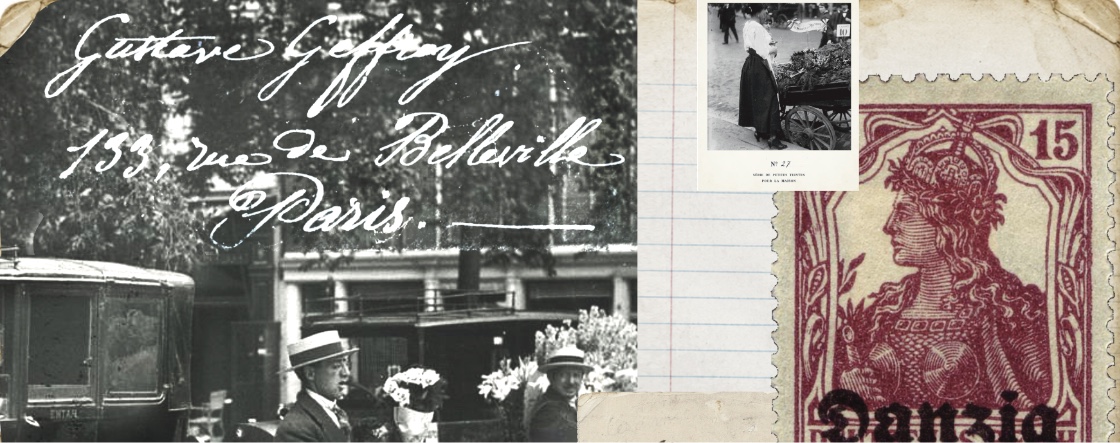
There is something wonderfully intriguing about seeing something at a size you don’t expect. A photograph made enormous can feel quite different from the same smaller sized photograph tucked into the corner of a journal. A tiny book can feel unexpectedly precious simply because of its size. A familiar object, enlarged or reduced, suddenly asks us to look at it differently.This is one of the things I love about working with ephemera and making junk journals: scale is something we can play with.
Making the familiar unfamiliar
We tend to have an instinctive idea of how large things should be.
A book is usually something we can comfortably hold in our hands. A postage stamp is small. A newspaper is large.
But once we start cutting, enlarging, reducing and rearranging, those assumptions disappear. And that is where things can become interesting. Take a photograph, for example. Enlarge it dramatically and suddenly a tiny detail becomes important. A face that might have been just one part of a larger image becomes the whole story. A texture, a shadow or an expression that might have gone unnoticed is suddenly impossible to ignore.
Reduce that same image and something quite different happens. It becomes intimate. Perhaps it feels like a little secret tucked into a page. The image hasn’t changed. Our relationship with it has.
Going large
I love taking a black-and-white photograph and enlarging it to newsletter size. Without colour to distract the eye, scale becomes even more noticeable. Shadows, faces, textures and small details can take on much more importance when the photograph is given room to breathe. An image that might once have been a small piece of ephemera can become the main event. And I think this is a lovely reminder that sometimes, when making a journal, we don’t have to keep everything small. A large piece of paper or a full-page photograph can create a wonderful pause amongst all those smaller details. It gives the eye somewhere to rest. It can also make everything around it feel smaller.
And then… go tiny
At the other end of the scale are my tiny books. I find miniature things almost impossible to resist. There is something about taking something we recognise as a substantial object — a book, for example — and making it tiny that immediately changes how we feel about it. A tiny book is no longer simply a book.
It becomes a little object to discover. It might be tucked into a pocket, attached to a page, slipped behind a photograph or simply placed somewhere unexpected. And because it is small, we have to lean in and look more closely. That is one of the pleasures of working with scale. Big things demand attention. Tiny things invite discovery.
Contrast makes a journal interesting
Perhaps the most interesting use of scale isn’t choosing between large and small, but putting them together. A large photograph beside a tiny piece of writing. A full-size page with a miniature envelope. A tiny book sitting on top of an oversized image. A small photograph surrounded by lots of empty space.These contrasts create rhythm. Just as music has loud and quiet moments, a journal can have moments that are visually loud and moments that are quiet. A page crowded with little details might be followed by a wonderfully simple page with one large image. Then perhaps we turn the page and discover something tiny. That change keeps us looking.
Don’t be afraid to break the rules
When making a junk journal, it can be tempting to think that everything needs to be the “right” size. But there really aren’t many rules. If something feels too large, perhaps that’s exactly why it works. If something is ridiculously tiny, perhaps that makes it more interesting. Try enlarging something that would normally be small. Try reducing something that would normally be large.
Take a photograph and crop it tightly. Make one little detail fill the page. Then take another photograph and make it tiny. Put the two together and see what happens. You may be surprised by how differently you respond to exactly the same image.
A little experiment
The next time you’re working on a journal page, choose one piece of ephemera and make three versions of it: Large. Original size. Tiny. Don’t think too much about where they are going to go. Just place them on your workspace and look at them. Which one catches your eye first? Which one makes you want to look closer?
Which one feels most surprising? Then try putting two of them together. You might discover that the most interesting version isn’t the “correct” size at all.
Big and small
I think that is what makes playing with scale so enjoyable. It gives us another way to tell a story. We can use size to create emphasis, surprise and contrast. We can use it to make something familiar feel strange, or something ordinary feel precious. And perhaps most importantly, it gives us permission to play. So, when you are making your next journal, don’t automatically reach for the size that seems right. Try going much bigger. Then try going much smaller. Because sometimes the most interesting things happen when we stop seeing objects at the size we expect them to be. And somewhere between the enormous photograph and the tiniest little book, there is a whole world of possibilities.

Leave a Reply